



Violence Against Women Within the Framework of Istanbul Convention and Law No. 6284
Violence Against Women Within the Framework of Istanbul Convention and Law No. 6284
Violence against women, which is one of the violations of human rights, is a common problem experienced in our country and in the world; however, it has been the subject of different regulations enforced by the states. Violence against women causes both physical and mental damage to women. Although "family" is considered as the most reliable environment for "women", the rate of physical, sexual, mental and economic violence experienced within family is higher compared to the rate of violence exposed outside the family. This indicates us that policies are needed in a wide range starting from the family, in order to solve the problem of violence against women. Today, there are preventive laws and international conventions for violence against women; however, the results in practice demonstrate that new policies and legal regulations are needed.
Although the concept of violence against women is quite old, its recognition as a social problem and the search for solutions to this problem are quite new. Violence, which manifests itself with threats, humiliation, injury, rape, harassment and many other behaviors, mostly arising from the desire of men to dominate women, also causes women to lose their self-values. On the other hand, it should be noted that the victims of violence against women are also the children.
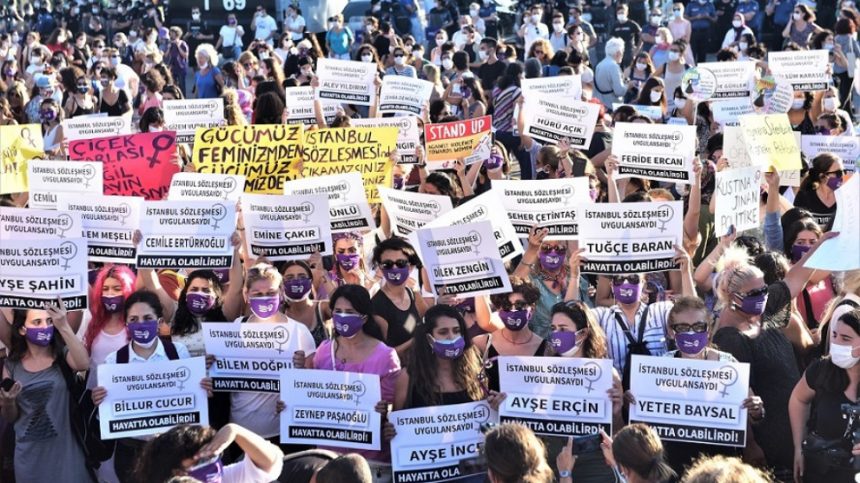
With the adoption of the concept of human rights by societies and the beginning of the struggle against violations, the concept of violence against women has been recognized, and fighting movements have started for prevention. The "Istanbul Convention", which is one of the arrangements made in this context, gains importance as it is the first convention in international law that has the power to impose sanctions on violence against women and violence within the family. The "Convention on the Prevention and Combating of Violence Against Women and Domestic Violence" is referred to as the Istanbul Convention since it was opened for signature in Istanbul in 2011 by the Committee of Ministers of the Council of Europe. In the Istanbul Convention, it has been emphasized that violence against women arises from the inequality between men and women, and regulations were imposed for the establishment of an independent control mechanism. While the Istanbul Convention supports the “Convention on the Elimination of All Forms of Discrimination Against Women (CEDAW), it also includes regulations that strengthen the elimination of discrimination specified in the relevant convention. Turkey is the first country to sign and ratify the Istanbul Convention.
Although the Istanbul Convention covers all women regardless of their marital status, it does not discriminate between individuals in terms of their sexual orientation. The convention states that violence against women means any act of gender-based violence that causes or may cause physical, sexual, psychological and economic pain and suffering to women, or threatens women with such acts. However, the Istanbul Convention stipulates that cooperation with institutions is required to prevent violence, NGOs should be included in prevention and education policies, and that financial resources should be allocated on the subject. With these aspects, the convention draws a roadmap for policies aimed at preventing violence. Undoubtedly, the support of public and private sector, and psychological and legal support play an important role in these policies.
After the abolition of the Ministry of State Responsible for Women in our country, the Ministry of Family and Social Policies was established. The relevant ministry had the "Draft Law on the Protection of Women and Family Members from Violence" prepared, and consulted the opinions of relevant institutions. Many institutions that came together within the scope of the "End Violence" Platform shared their proposals with the ministry, and Law No. 6284 (LAW ON THE PROTECTION OF THE FAMILY AND THE PREVENTION OF VIOLENCE AGAINST WOMEN) was enacted on 8 March 2012. Although the enactment of the relevant law was an important step taken on behalf of our country in the fight against violence against women, the deficiencies in its content were also expressed by women's organizations and attorneys of the period. In particular, the name of the law at the draft stage (the Draft Law on the Protection of Women and Family Members from Violence) was changed to "The Draft Law on the Protection of the Family and the Prevention of Violence Against Women" while it was being submitted to the Parliament, causing reactions from women's organizations and parliamentarians.
The provisions in the Law No. 6284 constituted important steps in the reflection of the fight against violence in our domestic law; however, it is a clear reality today that these steps are insufficient and have been inactive. The lack of an infrastructure work on the subject, the lack of knowledge of the authorized individuals about the law, the decisions of the judicial authority that ignore the law, and many similar reasons rendering the law ineffective in practice have rendered the Law No. 6284 inactive in cases of violence against women. For this reason, it is necessary to draw a common roadmap in the fight against violence against women with all relevant institutions and organizations. Mere legal regulations are insufficient in the fight against violence against women.